

Storing Up Peace: The Journey Begins
What if finding peace begins with remembering that God is with us, wherever we are on the journey?
“When I experienced peace I knew God was with me.”
Those words from Kellie White recently gave me a way to express what I hope we will discover together over the next several weeks.
We often think of peace as the absence of conflict, the resolution of a problem, or the moment when life finally settles down. But what happens when the problem remains, the conflict continues, or life takes us somewhere we never expected to be?
Can we experience peace even there?
I believe we can. Storing up peace for our spiritual journey begins with realizing, or remembering, that God is with us.
God Is With Us, Wherever We Go
Read Psalm 139
Find a quiet place, or your favorite spot to spend time with God, and read all of Psalm 139 aloud. Read slowly. Pause whenever a line or phrase catches your attention, and spend a little time reflecting on it. When you finish reading, return to this post.
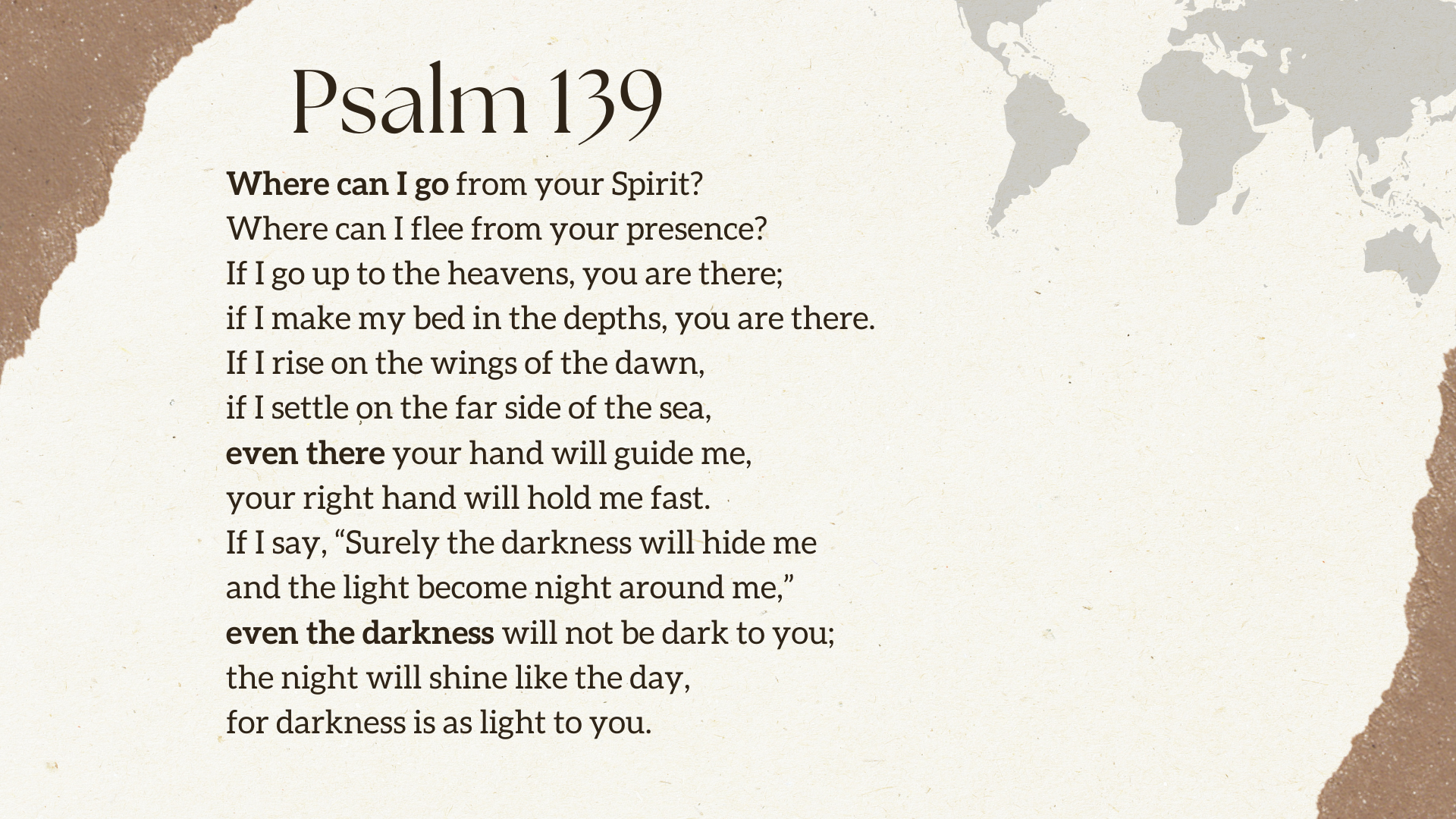
In Psalm 139, the psalmist asks, “Where can I go from your Spirit? Where can I flee from your presence?” The answer is nowhere. Whether we find ourselves in the heights of heaven or the depths of despair, God is there.
Jesus offers a similar promise in John 14. As he prepares his disciples for his departure, he tells them not to let their hearts be troubled. He reminds them of their connection to him and promises the presence of the Holy Spirit. Then he says:
“Peace I leave with you; my peace I give you.”
John 14:27
Jesus does not promise his disciples a life without uncertainty or difficulty. Instead, he reminds them of a relationship that will remain even when everything around them changes.
This is the foundation of the peace we are exploring together. We are on a remarkable journey, one that will take us through seasons of joy, uncertainty, growth, and even despair. And God is with us every step of the way.
We experience peace when we know God is with us.
Why We Need a Map
If God is with us wherever we go, why do we sometimes struggle to find peace?
One reason is that we can lose our bearings. When we don't understand where we are or what is happening within us, we can feel confused, discouraged, or even hopeless.
Much like a journey through Middle-earth in The Lord of the Rings, to follow Frodo and Sam, we need some sense of where they are, what lies ahead, and how their path relates to the journeys of the other characters. Without that understanding, it's easy to lose track of the story.
Our spiritual journeys can feel much the same. We need ways to understand where we are, recognize what God may be doing in our lives, and appreciate how our journey relates to the journeys of others.
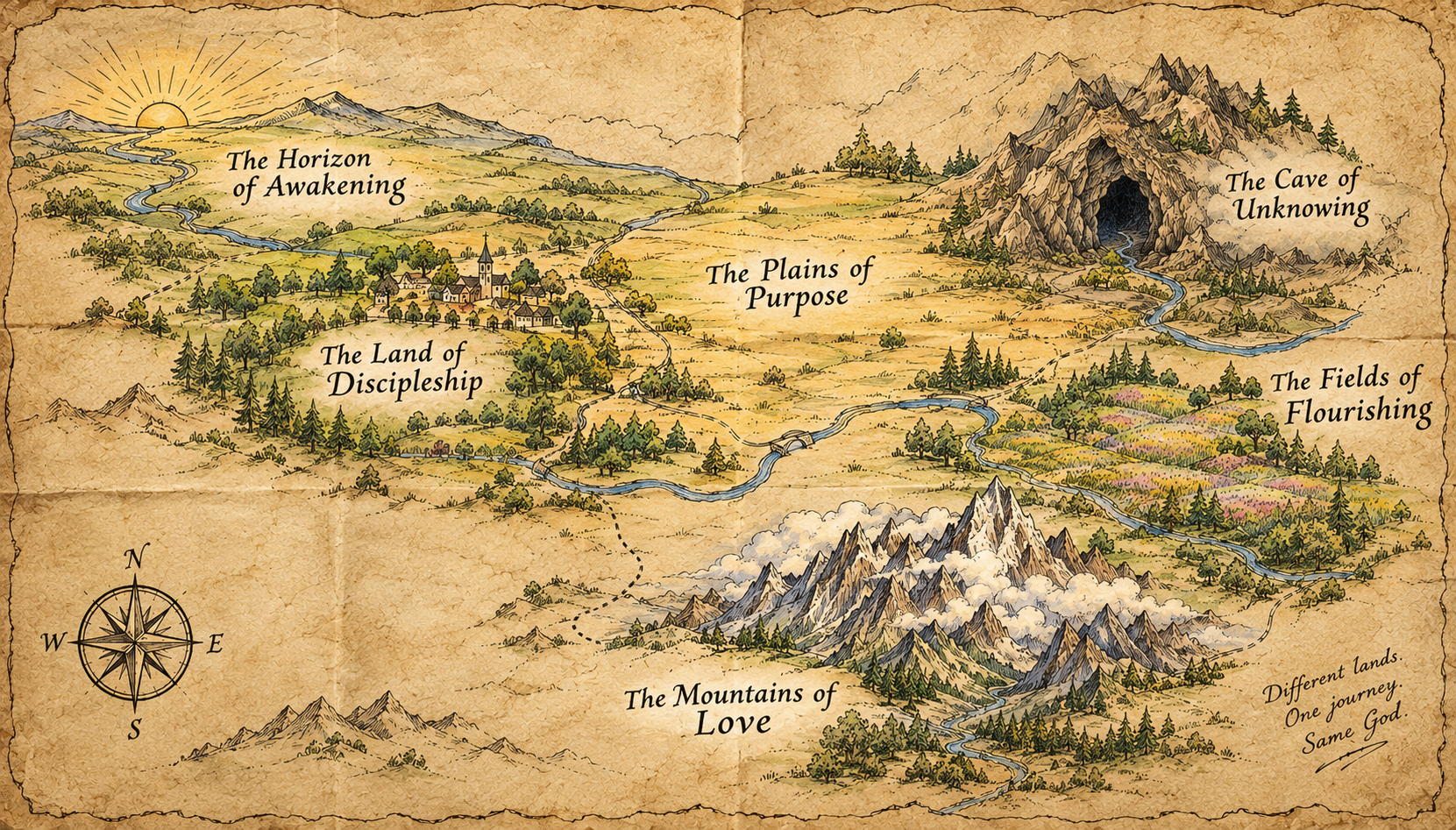
For this series, we're using a framework from Janet O. Hagberg and Robert A. Guelich's book The Critical Journey: Stages in the Life of Faith. It offers a map for understanding different experiences of spiritual growth.
But there is an important distinction: this is not a ladder we climb to become better Christians. It's a map that helps us understand where we are.
Different Places, One Journey
Rather than calling these experiences stages, we're going to call them lands or locations. The language matters because a numbered list can make it seem as though one location is better than another. But every location has its own gifts and challenges.
We also don't all travel the same road.
We may visit a place several times before settling there for a season. Circumstances may take us back to familiar territory, even after we've experienced something new. Two people can be the same age, share similar life circumstances, and attend the same church while experiencing very different things spiritually.
Our perspective is limited, too. When we're standing in one place, we may not be able to understand what someone a few destinations away is experiencing.
That can create tension. We may judge someone for not seeing what seems obvious to us, or wonder why a practice that once brought us peace no longer seems to help. We may even mistake someone else's spiritual season for a lack of faith.
A map doesn't solve every disagreement. But it can help us approach one another with greater patience and curiosity.
Storing up peace is a shared journey. We each have a part to play, and we can better appreciate one another when we recognize that we're not all standing in the same place.
Our First Stop: The Land of Discipleship
We began our exploration in what we're calling the Land of Discipleship, a place characterized by learning and belonging.
Here, faith begins to take shape in everyday life. We learn what it means to follow Jesus, not simply believe in him. We establish rhythms of worship, prayer, Scripture, service, and community. We give our time and resources, find ways to serve, and discover what it means to belong to a people who are learning to follow Jesus together.
Acts 2:42–47 offers a beautiful picture of this kind of life. The early Christians devote themselves to teaching, fellowship, breaking bread, and prayer. They share what they have, care for one another, and gather regularly.
In Romans 12:9–13, Paul describes the love that grows within such a community: genuine affection, service, generosity, patience, and hospitality.
Together, these passages remind us that we aren't meant to figure out the life of faith on our own. We learn by participating in a community that is also learning to follow Jesus.
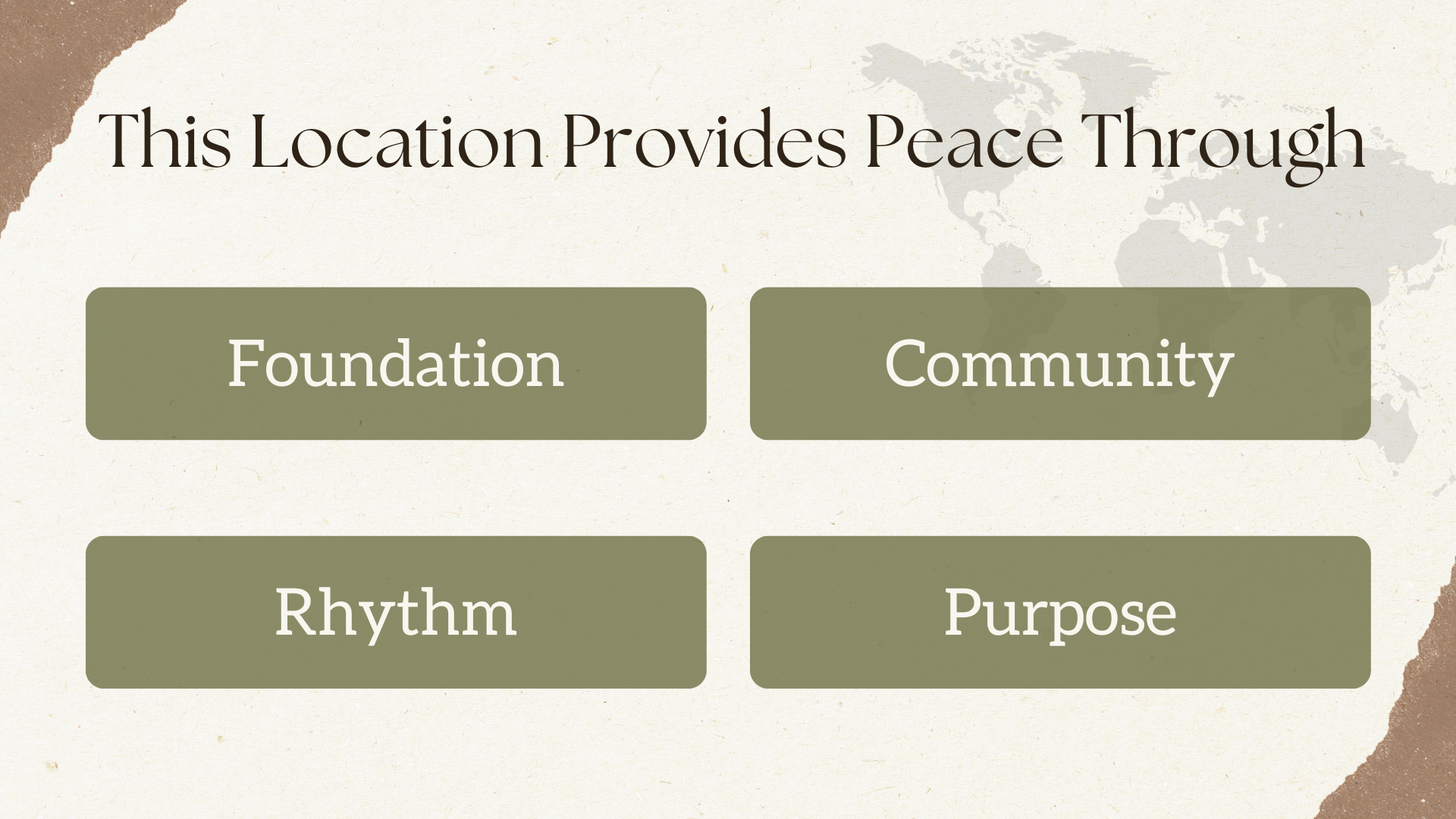
There is real peace to be found here.
- A foundation: We begin to understand what following Jesus looks like in everyday life.
- A community: We discover that we aren't meant to make this journey alone.
- A rhythm: Practices like prayer, Scripture, worship, and service help us return to God again and again.
- A purpose: We find ways to participate in what God is doing in the world.
If this were Middle-earth, the Land of Discipleship might feel a little like the Shire: familiar, welcoming, and full of the comforts of home.
And there is nothing wrong with that. These practices and relationships give our faith roots. They help us learn to love God and our neighbors through the ordinary rhythms of life.
But as we'll discover in the weeks ahead, even good things can become complicated when we lose sight of the relationship at the heart of them.
Wherever You Are, God Is With You
Over the coming weeks, we'll explore other locations on this map. Some may feel familiar and life-giving. Others may feel disorienting, lonely, or difficult to navigate.
The goal isn't to decide which location is best or to force ourselves toward a particular destination. It's to recognize where we are, look for what God is doing, and learn to live faithfully along the journey.
So, wherever you find yourself today, consider these questions:
- When have you experienced a deep sense of peace? What was happening in your life?
- When has peace seemed far away? What made it difficult to find?
- How might understanding your own spiritual journey help you extend greater grace to someone else's?
You don't have to have the whole journey figured out. You don't have to be in the same place as the person sitting next to you.
You simply need to remember that you are not traveling alone.
Take It Into Your Week
- Go for a walk. Ask God to bring to mind a time when you experienced peace. What was happening in your life? What helped you recognize God's presence?
- Spend some time journaling. Recall a time when peace seemed far away. What made peace difficult to find? What were you experiencing, and where did you turn for help?
- Practice noticing. Over the next few days, pause when you feel peaceful, unsettled, or somewhere in between. What is happening within you? What might God be inviting you to notice?
Wherever we are on the journey, God is with us.