
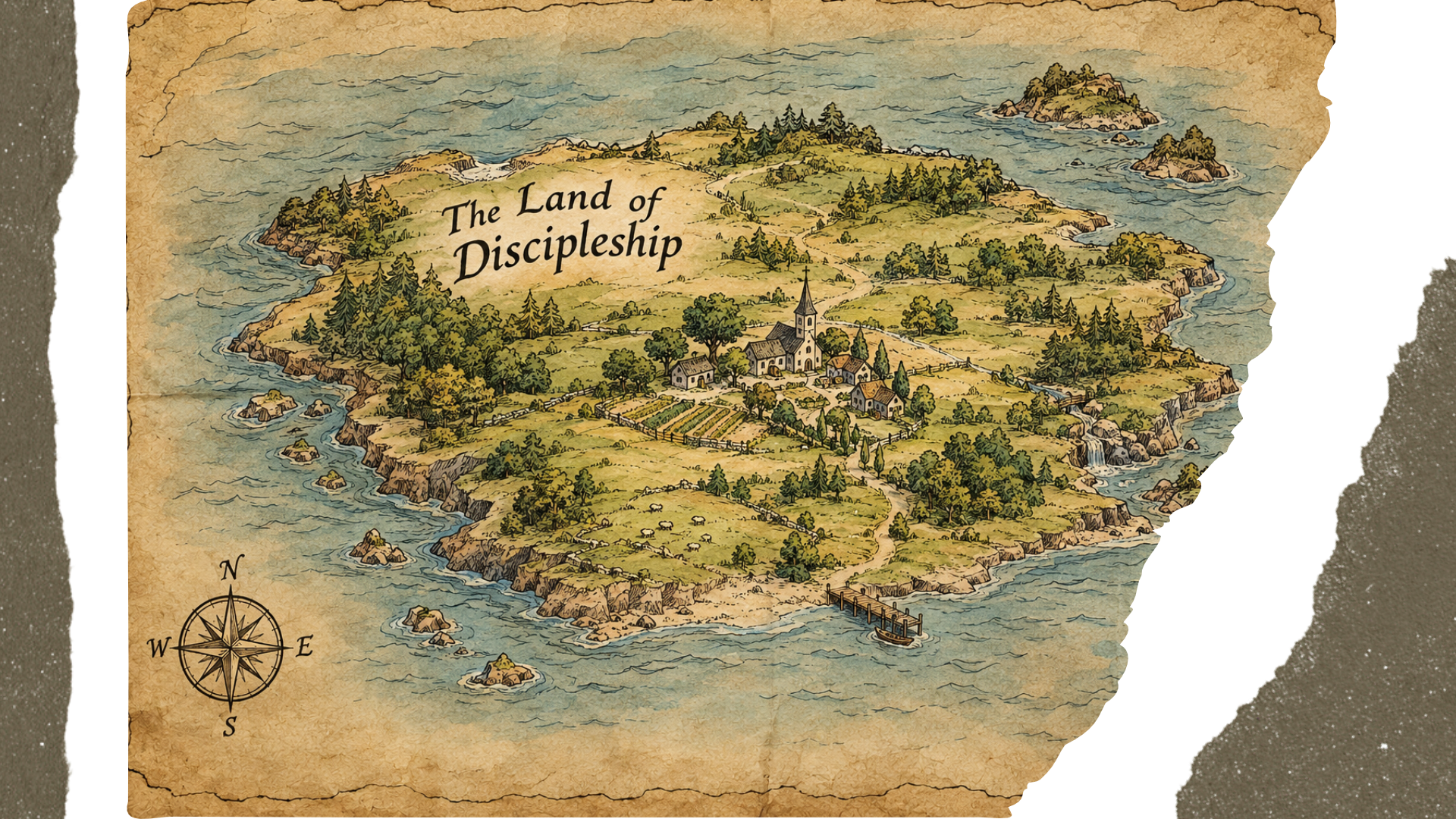
Storing Up Peace: When Discipleship Becomes an Island
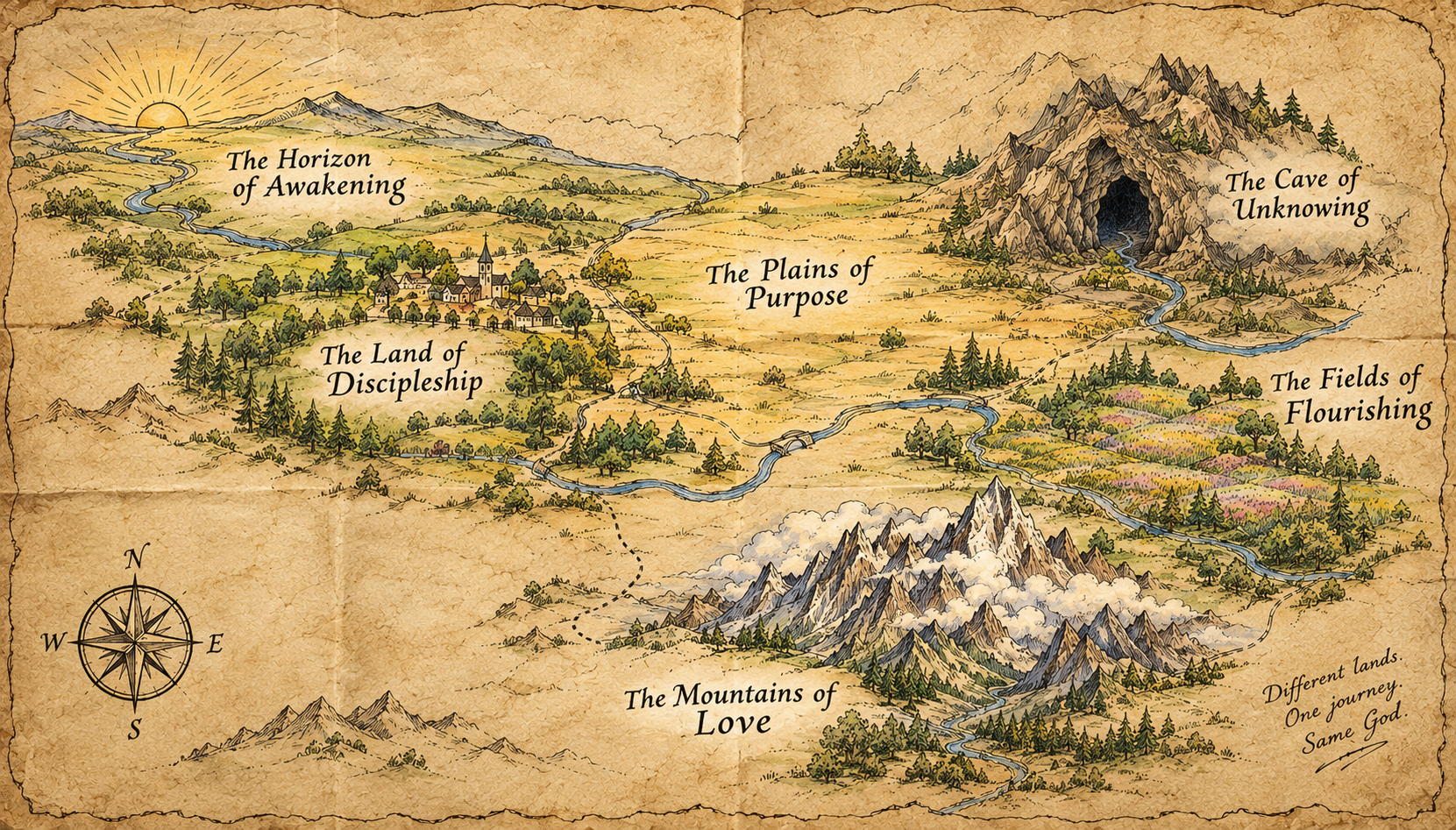
Last week, we introduced the idea that we are all Hobbits. Well, not exactly, but like Hobbits, we are on a journey. Not through Middle Earth, but through our faith. We are on a spiritual journey. Like any journey, we find ourselves in different places along the way. Sometimes we know exactly where we are. Other times, the landscape is unfamiliar, and we're not quite sure what comes next.
We also talked about an important truth that runs throughout this series:
There is nowhere we can go and not be in God's presence.
The psalmist reminds us:
“If I rise on the wings of the dawn, if I settle on the far side of the sea, even there your hand will guide me, your right hand will hold me fast.”
Psalm 139:9–10
Jesus offers a similar assurance to his disciples:
“Peace I leave with you; my peace I give you.”
John 14:27
These promises are important because our spiritual journeys don't all look the same. We won't always understand where we are, what God is doing, or why someone else's journey looks so different from our own. But we can trust that God is present along the way.
This week, we returned to the Land of Discipleship, exploring both the good that can be found there and the dangers present when we become stuck.
The Benefits of Discipleship
The Land of Discipleship can feel like the Shire on a warm, sunny day. It is a place many of us know well. It's where following Jesus begins to take on a new significance in our lives. We want to learn more about God, understand Scripture, develop spiritual practices, and spend time with others who share our faith.
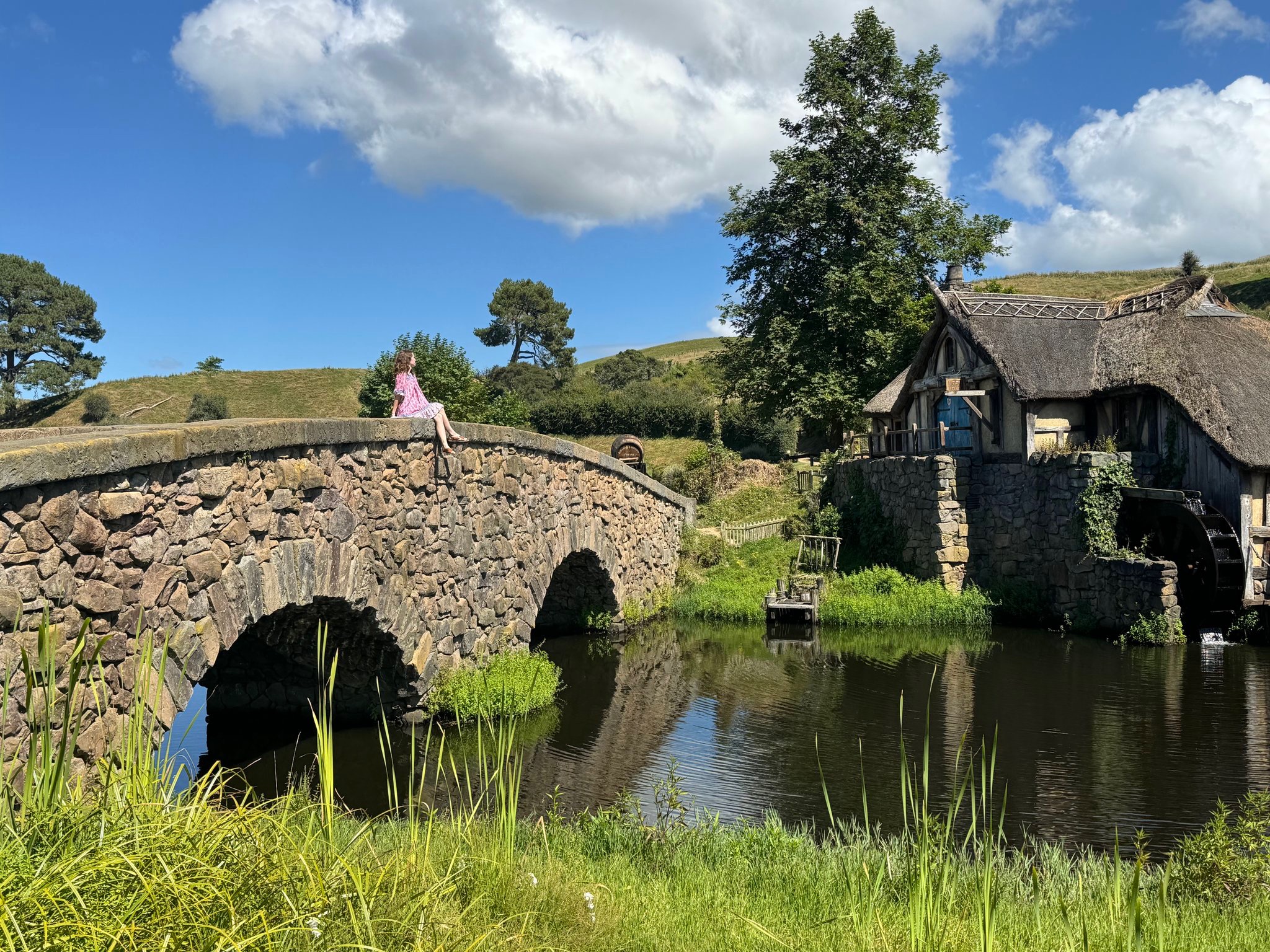
We discover the joy of Bible study, the importance of community, the gifts that come through service, opportunities to participate in God's mission, and rhythms of worship that carry our faith into everyday life. These are beautiful things!
For some, this enthusiasm might look like sharing a meaningful Instagram video with friends. For others, it might look like gathering at the church building on Tuesday morning for Bible study. The expressions may be different, but the desire is similar: we want to grow in our understanding of God and share what we're discovering with others.
What's important to remember is that these practices aren't limited to one season of life. We can continue learning, growing, worshiping, and serving whether we're 17 or 70. The Land of Discipleship is a place where following Jesus has become a meaningful part of who we are.
Reflection
- Take a moment to consider your own life. What practices, relationships, or experiences have helped you discover the joy of following Jesus? Where have you experienced the goodness of discipleship?
When We Experience the Journey Differently
But what happens when someone else's experience of faith looks very different from our own?
Imagine two people attending the same church.
Our first friend is Joe. He has spent years building his faith around the rhythms of church, Scripture, service, and community. Those things have been, and continue to be, life-giving for Joe. Then one day, Joe encounters Susie. She's asking questions about her faith that she hasn't asked before. Some of the familiar practices of church life no longer carry the same meaning they once did. Gathering at church often feels more isolating than uplifting.
Joe struggles to understand how Susie could question or walk away from something that has been so important to him.
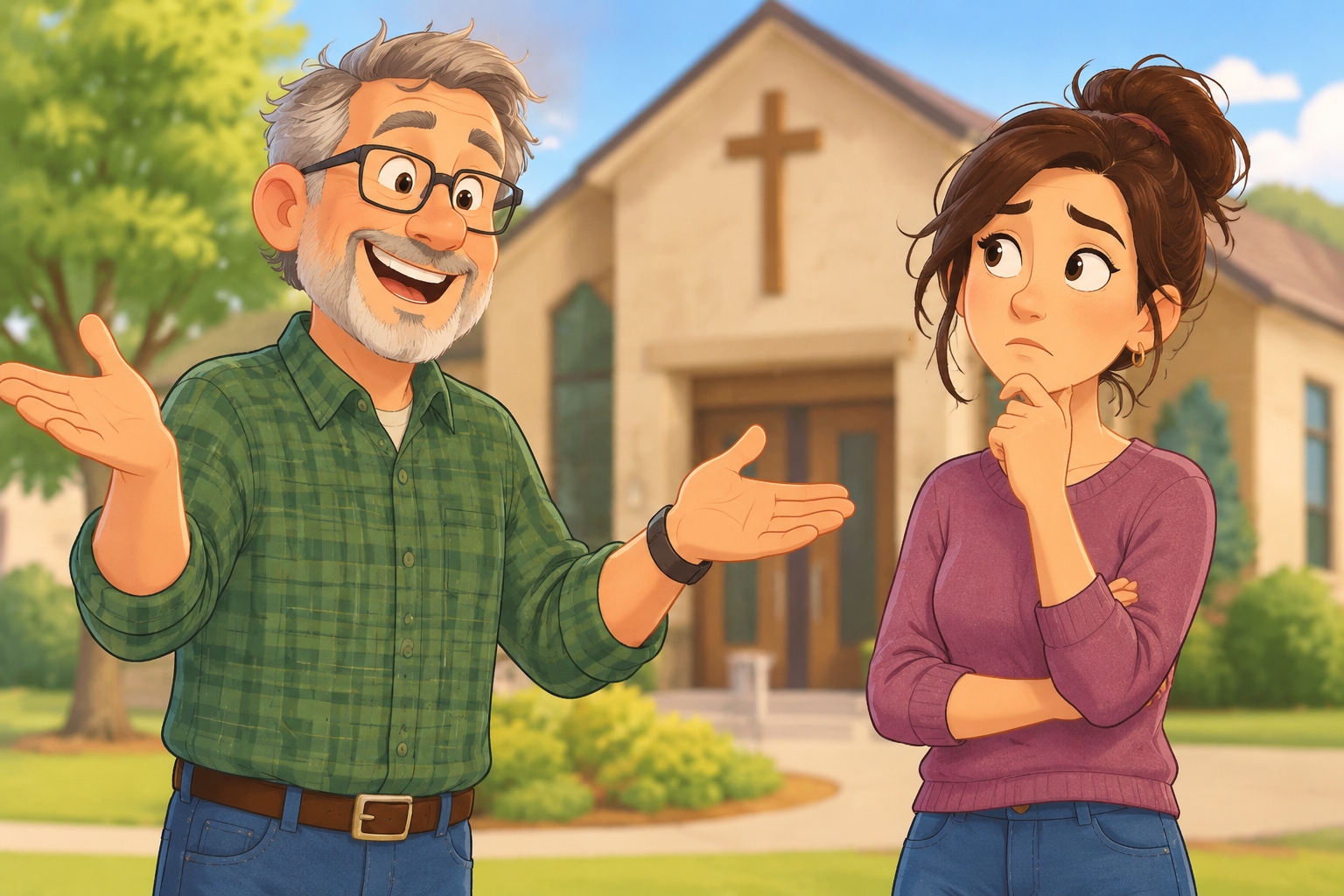
Or imagine the reverse. Susie looks at Joe and sees someone who seems perfectly content with the familiar rhythms of church life. She begins to wonder if he's ever wrestled with the deeper questions of faith.
In both cases, they are looking at someone else's journey and struggling to make sense of it because they are seeing it exclusively from their own location. And just like that, peace begins to feel very distant.
This is one reason I believe a map is helpful. The map doesn't tell us that every decision someone makes is right. It doesn't mean we'll always agree with one another, or that we can fully understand another person's experience simply by identifying where they are. But it can remind us that we don't see the whole landscape.
Someone else's experience may be different from ours without being meaningless. Their journey may look unfamiliar without being outside God's presence.
When we cannot understand ourselves or one another, we can begin to lose our peace. We may wonder whether we've lost our way, whether someone else has lost theirs, or whether God is still at work. The map gives us a way to reorient ourselves. We can pause, recognize where we are, look for what God is doing there, and learn to live faithfully in that place.
We can remember that, even when we don't understand someone else's journey, we are part of the same story. God is with us along the way.
When a Land Becomes an Island
There is something else we need to consider about the Land of Discipleship.
In The Critical Journey, Hagberg and Guelich describe how this land can become an island. It can become very tempting to believe that what is right for us in our faith is what is right for everyone else, too.
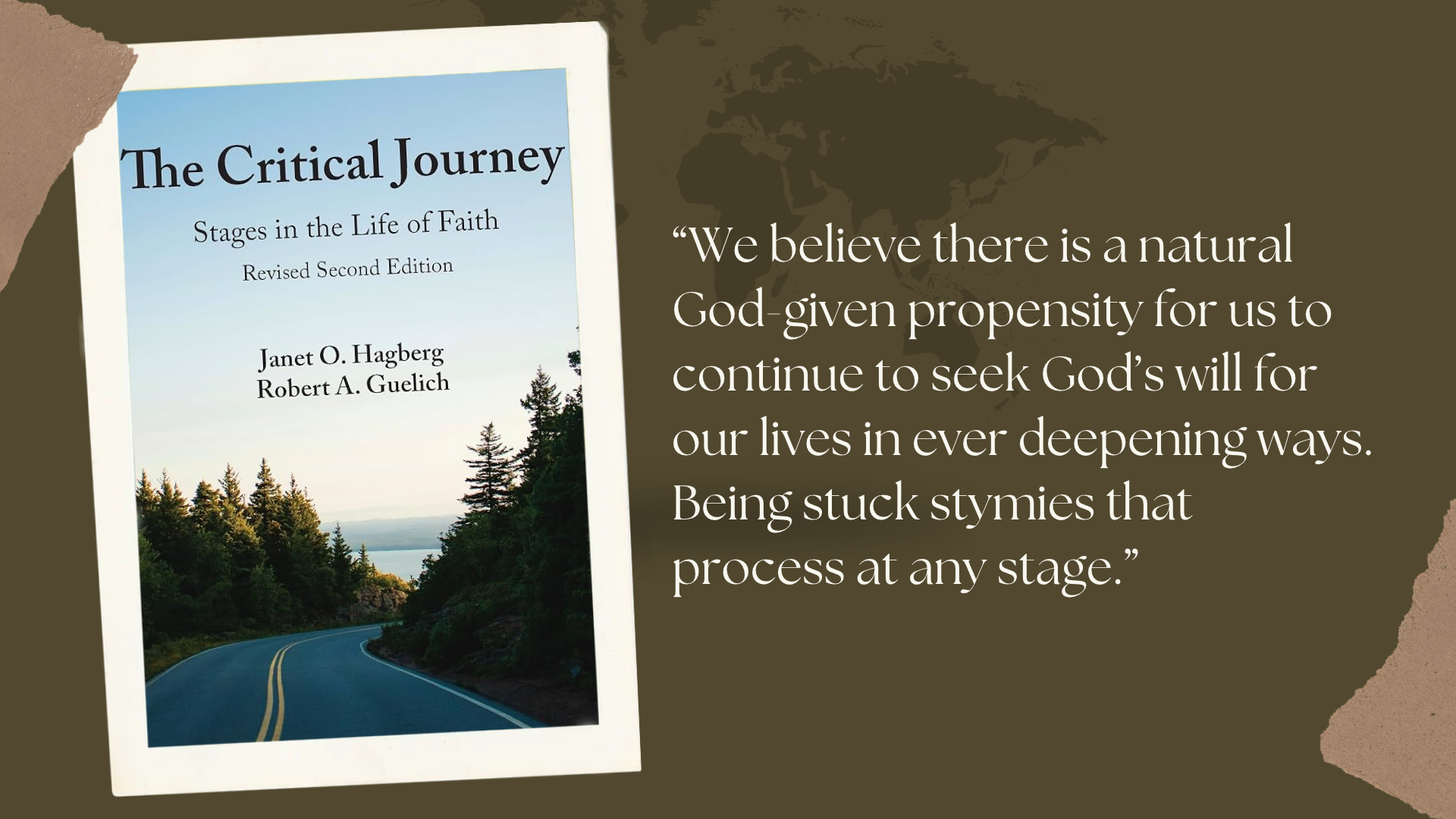
The very things that helped us grow can become things we use to measure someone else's faithfulness. Our familiar practices become expectations for everyone. Our community becomes an exclusive circle. Our understanding of Scripture becomes something we use to prove we're right.
The problem isn't the practices themselves. It's what they are forming in us.
Consider some examples:
- Bible study can deepen our love for God, but it can also become a way to prove we're right.
- Community can teach us to love others, but it can also become an exclusive circle of people who think like us.
- Service can reveal gifts we didn't know we had, but it can also become a source of identity or status.
The same activities that help us grow can also reinforce what we already know and protect what makes us comfortable.
One of the more striking biblical examples of this comes from Jesus' parable of the prodigal son. It's a story worth spending a little time with as we consider what it means to become stuck.
In Luke 15:25–32, the older son returns from working in the fields to discover that his younger brother has come home. Rather than celebrating, he becomes angry. He reminds his father of his years of faithful service and cannot understand why his brother is receiving such a celebration.
Before we quickly condemn the older son and his failings, I think it's important to recognize there seems to be faithfulness present. There's something admirable about his commitment to his father and his responsibilities. He has been consistent, dependable, and trustworthy.
But somewhere along the way, his sense of faithfulness has become a barrier to celebrating his brother's return. He is so focused on what he believes is fair that he cannot recognize the grace unfolding right in front of him.
It's a sobering picture of what can happen when we become stuck.
A Reflection from Scripture
Read Luke 15:25–32 and consider these questions:
- What is admirable about the older son's commitment to his father and his responsibilities?
- How does his sense of faithfulness become a barrier to celebrating his brother's return?
Be careful not to rush to judgment. Take some time to recognize both the goodness in the older son's faithfulness and the ways it has become an obstacle.
Becoming stuck isn't always so obvious. Sometimes it looks like resentment toward someone who receives grace we believe is undeserved. Other times, it can take on a much more damaging form, when we become so convinced we're defending God that we can no longer recognize what God is doing.
Learning to Recognize the Spirit
So how do we continue growing? How do we recognize when the things that once helped us follow Jesus are beginning to hold us back?
The letter of 1 John offers some helpful guidance. John encourages the church to test the spirits, to love one another, and to remember that perfect love drives out fear (1 John 4:1, 7, 18–21).
That gives us an important question to carry into our own spiritual lives:
- Are my spiritual practices helping me grow in love, or are they helping me feel more secure in being right?
This isn't an invitation to abandon the practices that have shaped our faith. Quite the opposite. It's an invitation to let those practices continue doing what they were meant to do: draw us closer to God and form us into people who love others.
I encourage us all to take some time this week to sit with that question. You might bring it into your next time of Bible reading, prayer, or reflection. As you consider the people you disagree with or struggle to understand, ask God to help you see them with greater love and curiosity.
We know disagreements are coming. Misunderstandings are inevitable. Relationships will be challenging. And yet, God is present.
Holding On to the Good
I don't want us to leave the Land of Discipleship thinking it's a bad place to be. There is so much good here!
Following Jesus brings a new enthusiasm for learning, growing, worshiping, serving, and sharing life with others. We should celebrate those things and continue to make room for them in our lives. But we also need to remain open to the possibility that God is inviting us into something more.
There is no set amount of time we should spend in any particular land. What matters is following the leading of the Holy Spirit. If the Spirit says stay, we stay. If the Spirit says go, we must be ready to go.
Paul offers this encouragement to the church in Thessalonica:
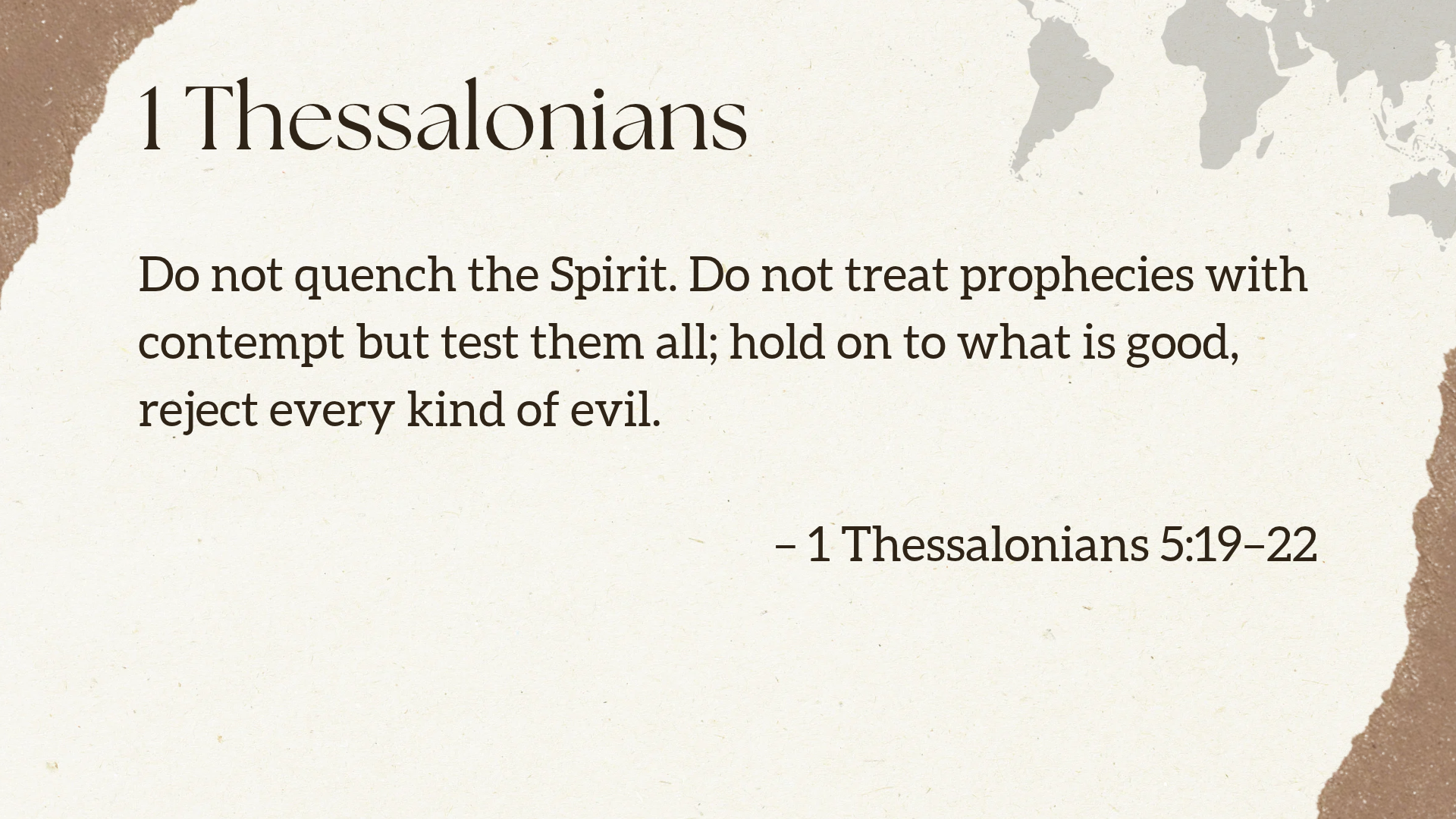
We can hold on to the good found in the Land of Discipleship, reject the things that keep us stuck, and remain open to the ever-expanding work of the Spirit in our lives.
That's part of what it means to be on a journey. And perhaps it's also part of what it means to store up peace: learning to trust that God is at work in places we understand and places we don't, in people whose faith looks familiar and people whose journeys look very different from our own.
One Story to Love Them All
We are all part of the same story. And God is with us along the way.
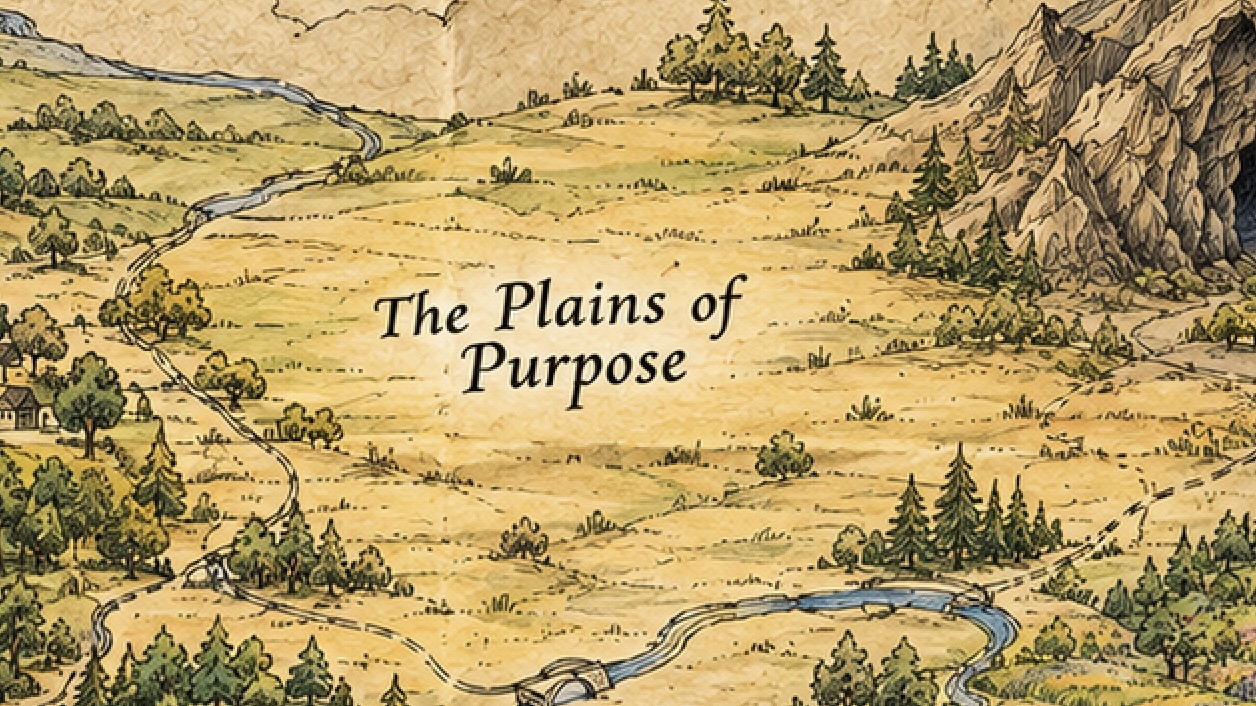
Next week, we'll explore what happens when God invites us beyond the Land of Discipleship and into the Plains of Purpose. We'll consider how our relationship with God continues to grow and how the things that once brought us peace can begin to change.